


Can you still claim compensation for whiplash in the UK?
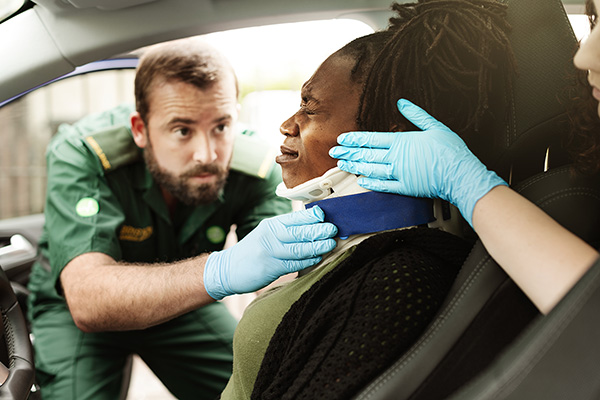 If you've suffered a whiplash injury following a road traffic accident, one of the first questions you're likely to ask is whether you can still make a compensation claim. Over the past few years, there has been a great deal of media coverage surrounding changes to the law, leading many people to believe that whiplash claims have been abolished altogether.
Fortunately, that simply isn't true.
Whiplash claims are still very much possible in Wales and England. However, the way many road traffic accident claims are handled has changed significantly following the introduction of the Whiplash Reform Programme in 2021.
As experienced personal injury solicitors in Ebbw Vale, South Wales, we regularly advise clients who have suffered injuries in road traffic accidents.
In this guide, we'll explain what whiplash is, who can make a claim, how the current rules work, how compensation is calculated, and what you should do if you've been injured.
What is whiplash?
Whiplash is a soft tissue injury affecting the neck, shoulders or upper back. It most commonly occurs when the head is suddenly forced backwards and forwards, stretching muscles, tendons and ligaments beyond their normal range of movement.
Although whiplash is often associated with rear-end collisions, it can occur in many different types of road traffic accident.
Common symptoms include:
- Neck pain and stiffness.
- Reduced movement in the neck.
- Headaches.
- Shoulder pain.
- Pain between the shoulder blades.
- Muscle spasms.
- Dizziness.
- Tingling or numbness in the arms in some cases.
Symptoms do not always appear immediately. It is not unusual for pain and stiffness to develop several hours or even a day or two after an accident.
Can you still make a whiplash claim?
Yes.
If another road user was wholly or partly responsible for causing the accident, you may still be entitled to claim compensation.
However, many whiplash claims involving drivers and passengers aged 18 or over are now subject to the Whiplash Reform Programme introduced in May 2021.
The reforms changed both the process for making many road traffic accident claims and the way compensation for certain whiplash injuries is calculated.
The reforms did not remove your right to claim compensation where someone else's negligence caused your injuries.
What changed under the Whiplash Reform Programme?
The reforms primarily affect occupants of cars and other motor vehicles who suffer relatively minor whiplash injuries.
For many eligible claims where the overall value does not exceed £5,000 for personal injury (and up to £10,000 overall), compensation for the whiplash element is now set using fixed statutory tariffs rather than being assessed entirely on previous court guidelines.
This means that compensation for straightforward whiplash injuries is generally lower than it would have been before the reforms.
Many eligible claimants are also expected to pursue their claim through the Official Injury Claim service, although legal advice remains available and, depending on the circumstances of the case, instructing a solicitor may still be entirely appropriate.
Importantly, the reforms do not apply to every road traffic accident claim.
Which claims are not affected?
Not every personal injury claim involving a road traffic accident falls within the new rules.
For example, different rules may apply if:
- The injured person was under 18.
- The injured person was a vulnerable road user, such as a pedestrian or cyclist.
- The accident involved a motorcycle.
- The injuries are more serious than a straightforward whiplash injury.
- The value of the claim exceeds the relevant limits.
- There are additional injuries that fall outside the tariff system.
Every case should therefore be assessed on its own facts rather than assuming the reforms automatically apply.
How much compensation can you receive?
This is probably the question we hear most often.
Unfortunately, there is no single answer.
For tariff-based whiplash injuries, compensation for pain, suffering and loss of amenity is fixed according to the duration of symptoms, as set out in the relevant legislation.
However, many claims also include compensation for additional financial losses, commonly referred to as special damages.
Depending on your circumstances, these may include loss of earnings, medical expenses, travel costs, rehabilitation expenses, prescription charges and the cost of care or assistance provided by family members.
If your injuries extend beyond a straightforward tariff whiplash injury or involve additional injuries, different compensation rules may also apply.
For this reason, it is always sensible to obtain legal advice before assuming how much your claim may be worth.
Do you need medical evidence?
Absolutely.
No genuine personal injury solicitor should advise making a whiplash claim without appropriate medical evidence.
A medical expert will normally examine you and prepare an independent report describing your injuries, your symptoms, your recovery and any ongoing problems.
This report forms one of the most important pieces of evidence in any personal injury claim.
Medical evidence protects both claimants and defendants by ensuring that compensation is based upon properly diagnosed injuries rather than unsupported allegations.
What evidence will help your claim?
The strongest claims are usually supported by good-quality evidence gathered as early as possible.
Helpful evidence may include photographs of the accident scene, vehicle damage, dashcam footage, witness details, medical records and evidence of any financial losses resulting from your injuries.
It is also sensible to keep a record of your symptoms as your recovery progresses. Even simple notes about pain levels, medical appointments or time away from work can sometimes prove valuable later.
Read: What to do immediately after an accident
Is there a time limit for making a claim?
In most cases, yes.
Generally speaking, personal injury claims must be started within three years of the accident or the date you became aware of your injury.
There are some important exceptions, including claims involving children and individuals who lack mental capacity.
Because limitation rules can sometimes be complex, it is always advisable to seek legal advice sooner rather than later.
Do all whiplash claims go to court?
No.
In reality, the vast majority of personal injury claims settle without the need for a full court hearing.
If liability is admitted and the medical evidence is clear, many claims are resolved through negotiation between the parties or their insurers.
Court proceedings are usually only required where liability is disputed, the value of the claim cannot be agreed or another significant issue remains unresolved.
Should you accept the insurer's first offer?
It can be tempting to accept an early settlement, particularly if you're worried about finances or simply want the matter resolved quickly.
However, early offers are not always made with the benefit of complete medical evidence.
Accepting compensation before your injuries have been properly assessed could leave you under-compensated if your symptoms persist for longer than expected or additional problems develop.
Before accepting any settlement, it is usually sensible to ensure that you fully understand the nature of your injuries and the long-term impact they may have.
Why legal advice still matters
Although the claims process has changed for many whiplash cases, obtaining legal advice remains just as important as ever.
Every accident is different. Some injuries fall outside the tariff system, some claims involve multiple defendants, and some clients have suffered significant financial losses alongside their physical injuries.
An experienced personal injury solicitor can explain which rules apply to your circumstances, help gather the right evidence, assess whether any settlement offer is fair and guide you through the claims process from beginning to end.
Your legal right to claim compensation has not been removed
The introduction of the Whiplash Reform Programme has undoubtedly changed the way many road traffic accident claims are handled, but it has not removed your legal right to claim compensation where someone else's negligence has caused your injuries
If you have suffered whiplash following a road traffic accident in Wales or elsewhere in the UK, understanding your legal rights is the first step towards making informed decisions about your recovery and any potential compensation claim.
At Fonseca Law, our experienced personal injury solicitors in Ebbw Vale advise clients throughout South Wales and beyond on road traffic accident claims, whiplash injuries and personal injury compensation. We provide straightforward legal advice, clear guidance and practical support to help clients achieve the best possible outcome.