


Your holiday pay rights as a UK worker
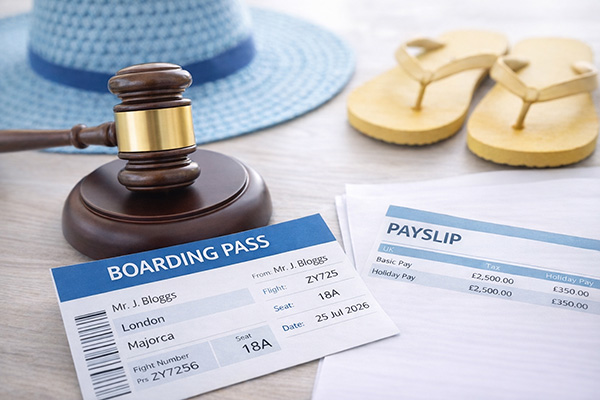 Holiday pay disputes are one of the most common employment law issues we deal with here in Ebbw Vale and across South Wales. Many employees and workers assume their employer is calculating their annual leave correctly - until they notice their payslip looks lower than expected, overtime has not been included, or accrued holiday has not been paid when leaving a job.
If you believe you have been underpaid or denied holiday pay, you are not alone. UK employment law provides strong protections, but the rules can be complex.
In this guide, we’re going to explain your holiday pay entitlement, how it should be calculated, and what steps you can take if there is a dispute.
Your statutory right to paid annual leave
Under the Working Time Regulations 1998, most workers in the UK are entitled to a minimum of 5.6 weeks’ paid annual leave per year.
For a full-time employee working five days per week, this equates to:
- 28 days’ paid holiday per year
This statutory entitlement applies to employees and many workers, including:
- Part-time staff
- Zero-hours workers
- Agency workers
- Workers on irregular hours contracts
Importantly, part-time workers must not be treated less favourably. Their holiday entitlement is calculated on a pro-rata basis.
Employers may offer more than the statutory minimum, but they cannot offer less.
How holiday pay should be calculated
This is where many disputes arise.
Holiday pay should reflect a worker’s normal remuneration. It should not be limited to basic salary if you regularly earn more than that.
Depending on your working arrangements, holiday pay may need to include:
- Regular overtime payments
- Commission that is intrinsically linked to your work
- Regular bonuses
- Shift allowances
Case law over recent years has clarified that if payments are regularly received and form part of your normal earnings, they may need to be included when calculating holiday pay.
For workers with irregular hours or variable pay, holiday pay is generally calculated using an average over the previous 52 paid weeks (ignoring weeks where no pay was received).
Incorrect calculations frequently arise where employers:
- Pay basic salary only
- Exclude overtime that is regularly worked
- Fail to update calculations after pay increases
- Use outdated reference periods
If your holiday pay seems lower than your usual earnings, it may be worth investigating further.
Holiday pay for zero-hours and irregular workers
Recent legal developments have clarified that part-year and irregular-hours workers are still entitled to the full 5.6 weeks’ statutory leave. Employers cannot simply pro-rate holiday entitlement by using percentage methods unless done lawfully.
Following Supreme Court guidance in recent years, the calculation of holiday entitlement and pay for part-year workers must be handled carefully. Many employers have historically applied the wrong formula.
This remains a particularly misunderstood area of UK employment law.
What happens when you leave your job
When employment ends, you are entitled to be paid for any accrued but untaken statutory holiday.
Employers cannot withhold accrued holiday pay simply because:
- You resigned
- You were dismissed
- You did not give full notice (unless contractually permitted deductions apply)
Failure to pay accrued holiday is considered an unlawful deduction from wages.
What to do if you have a holiday pay dispute
If you believe your holiday pay is incorrect, there are practical steps you should take.
First, gather evidence.
Review:
- Your contract of employment
- Your payslips
- Your employer’s holiday policy
- Records of overtime or commission
Second, raise the issue informally with your employer or payroll department. Many disputes arise from genuine administrative errors.
If the issue is not resolved, you may consider submitting a formal grievance. This creates a written record and demonstrates that you have attempted to resolve matters internally.
If internal procedures fail, you may be able to bring a claim in the Employment Tribunal for:
- Unlawful deduction from wages
- Breach of contract
- Failure to pay statutory holiday
Before issuing a tribunal claim, you must contact ACAS and engage in Early Conciliation. Strict time limits apply. In most cases, you have three months less one day from the date of the deduction or underpayment to bring a claim.
Missing this deadline can prevent you from pursuing compensation.
Read: Common questions about Contract of Employment
Why early legal advice matters
Holiday pay law is more technical than many people realise. Calculations can be complicated, especially where variable pay, commission structures, or irregular hours are involved.
As employment law solicitors based in Ebbw Vale, we regularly advise employees and workers throughout South Wales on:
- Underpaid annual leave
- Zero-hours holiday entitlement
- Holiday pay on termination
- Overtime inclusion disputes
- Employment Tribunal claims
Seeking advice early can help you understand whether you have a viable claim and what compensation you may be entitled to recover.
Looking ahead
Holiday pay disputes are not simply about a few days’ wages. They are about ensuring workers are treated fairly and lawfully under UK employment law.
If you suspect you are not receiving the correct holiday pay, do not ignore it. Reviewing your entitlement now could prevent further underpayments in the future.
If you would like confidential advice from experienced employment law solicitors in Ebbw Vale, our team of legal specialists are here to help.